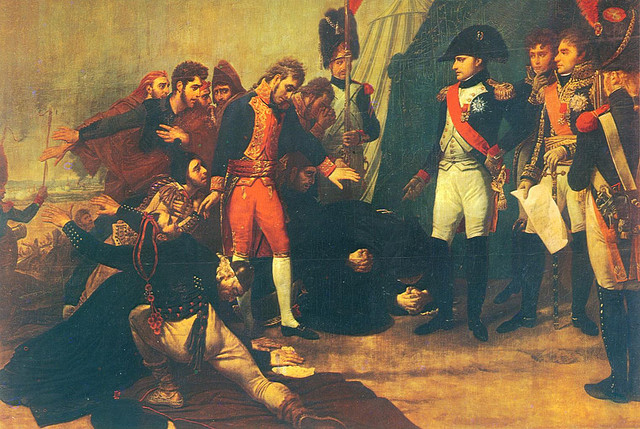


The 22nd of July, in the Casa de Postas del Camino Real, in a humble inn on the outskirts of Villanueva de la Reina, the surrender was officially signed. The next day, in the battlefield, the French army honoured the Spanish army, of which we have no documentary proof. The painter José Casado del Alisal represents this scene in one of his paintings.
This victory meant new hope for Spain, and the beginning of the end of Napoleon’s rule over Europe, despite the fact that the War of Independence would stretch over the next six years.
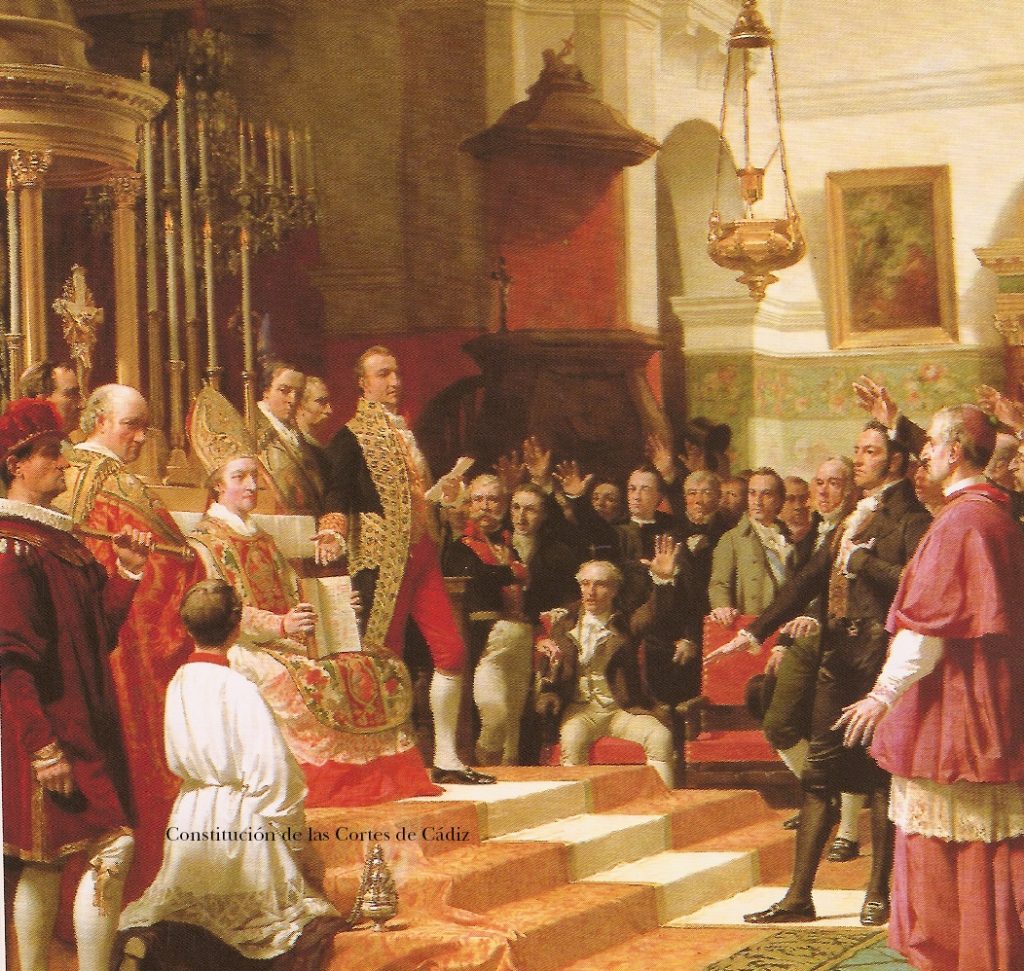
Fernando VII was freed, and eagerly welcomed back by the Spanish people, who dubbed him “El Deseado” (The desired one). Meanwhile, in 1812 another historical event takes place, when the Cortes of Cádiz meet to develop the first Spanish Constitution, commonly known as “La Pepa”, which could not come entry into force until 1833 due to the absolutist government established upon the king’s return.
For this heroic feat, Bailén received numerous awards and recognition, such as the title of “Very Noble and Loyal” obtained in 1890, or the City status, given in 1850. The Queen Isabel II demanded from then on that every city with more than 10.000 inhabitants must name one of their three main streets under the name of Bailén, and ordered the construction of an ornamental public fountain coupled with a marble statue, to improve the water supply of such a noble city, additionally, in recognition of the merits of the inhabitants, who actively participated in the battle, at the town mayor’s request. Nowadays, the fountain is known as “La Diosa Ibera de la Plaza del General Castaños” (The Iberian Goddess of General Castaños’ square) or “La Matrona” (The Matron).